Childhood development is a fascinating and complex journey, a period of rapid and significant change that shapes the foundation of who we become. For parents, caregivers, and educators, understanding these stages is key to providing the nurturing environment children need to thrive and unlock their full potential.
What is Childhood Development?
Childhood development refers to the sequence of physical, language, thought (cognitive), and socio-emotional changes that occur in a child from birth up to the beginning of adolescence.1 While every child is unique and develops at their own pace, these changes generally follow predictable patterns, often called developmental milestones.2
The Four Core Domains of Development
Development is holistic, meaning progress in one area often influences others.3 We can categorize this growth into four main domains:
1. Physical Development
This domain covers the growth of the body and the brain, and the development of motor skills (coordination, balance, and movement).4
- Gross Motor Skills: Involve large muscles for activities like crawling, walking, running, and jumping.5
- Fine Motor Skills: Involve small muscles, often in the hands, for tasks like grasping, drawing, and buttoning a shirt.6
2. Cognitive Development
Cognitive development is about how children learn to think, explore, and problem-solve.7 It includes the development of knowledge, memory, language, and executive functions (like planning and self-control).
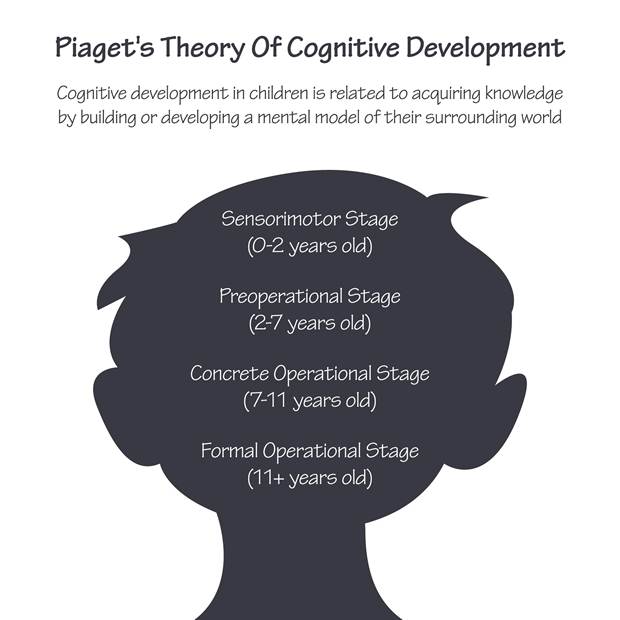
- Key Concept: Swiss psychologist Jean Piaget described stages where children construct an understanding of the world through interaction.8 A key cognitive milestone is object permanence—knowing that an object still exists, even if it is hidden.9
Shutterstock
3. Language Development
More than just learning words, language development involves the ability to communicate, understand, and express feelings.10 This includes receptive language (understanding what is said) and expressive language (speaking and communicating).11
- Stages: From cooing and babbling in infancy to speaking first words (around 12-18 months) and forming complex sentences, language skills rapidly expand during the preschool years.12
4. Social and Emotional Development (Socio-Emotional)
This domain focuses on a child’s ability to form relationships, manage their feelings, and understand the feelings of others.13 A crucial part of this is developing a secure attachment to primary caregivers.
- Emotional Regulation: Learning to manage powerful feelings like anger, frustration, and excitement in healthy and constructive ways.14
- Empathy: Developing the ability to see things from another person’s perspective.15
Key Stages and Milestones
While development is continuous, we can broadly group the journey into distinct stages.
| Stage | Age Range | Core Focus & Milestones |
| Infancy | Birth – 1 Year | Trust and Attachment. Develops reflexes, rolls over, sits up, begins to babble, explores the world primarily through senses (touch, taste). |
| Toddlerhood | 1 – 3 Years | Autonomy and Independence. Walks independently, develops fine motor skills (stacking blocks), speaks first phrases, begins toilet training, expresses strong emotions (“terrible twos”). |
| Preschool | 3 – 5 Years | Initiative and Imagination. Runs, skips, draws simple shapes, asks “why,” engages in complex imaginary play, learns to share and take turns (social skills). |
| Middle Childhood | 6 – 12 Years | Competence and Peer Relationships. Master academic skills (reading, math), logic-based thinking, develops stronger friendships, understands rules and fairness. |
Nurturing Healthy Development: Tips for Parents
The most powerful tool for fostering a child’s development is responsive and engaged interaction.
- Read Together Daily: This is crucial for both cognitive and language development, introducing new vocabulary and concepts.
- Encourage Play: Play is a child’s “work.”16 Unstructured play (allowing the child to direct the activity) boosts creativity, problem-solving, and socio-emotional skills.17
- Validate Feelings: Help your child name their emotions (“I see you are frustrated because the tower fell”) to teach them emotional literacy and regulation.18
- Create a Safe Exploration Zone: Provide a secure environment that allows them to move, touch, and safely experience their surroundings, which encourages motor and sensory development.19
- Model Positive Behavior: Children learn by observing. Your reactions to stress, your interactions with others, and your enthusiasm for learning all serve as a template for them.
When to Seek Guidance
It is essential to remember that variability is normal. Some children walk early, others talk early. However, significant, consistent delays in meeting multiple milestones might warrant a conversation with your pediatrician or an early childhood specialist.
- Common Red Flags (Seek advice if you notice): Loss of skills they once had, inability to bear weight by 1 year, lack of eye contact, or a severe delay in talking or understanding others.
The journey of childhood development is truly a masterpiece in the making. By understanding the core domains and providing consistent love, support, and opportunities for exploration, we empower our happy little minds to grow into confident, capable, and compassionate individuals.