Hello and a huge, heart-felt welcome to Happy Little Minds!
We are absolutely thrilled that you’ve stopped by. If you’re a parent, caregiver, educator, or anyone passionate about nurturing the healthy, joyful development of children, you’ve found your new community.
👋 Who We Are
At Happy Little Minds, we believe that every child deserves the chance to grow up feeling loved, confident, and emotionally resilient. Our mission is simple: to provide you with reliable, practical, and encouraging resources to help you guide the wonderful—and sometimes challenging—journey of raising little humans.
📚 What You Can Expect
This blog is a place for honest conversations, evidence-based advice, and plenty of inspiration. We’ll be covering topics like:
Positive Parenting Strategies: Practical tips for setting boundaries with love.
Emotional Literacy: Helping children understand and manage big feelings.
Developmental Milestones: What to look for and how to encourage growth.
Fun & Learning: Creative activities to spark curiosity and learning through play.
Mindfulness for Families: Tools for keeping both you and your children calm and centered.
✨ Join Our Community
We know that parenting can sometimes feel isolating, but you are not alone! Consider this space your supportive village. We encourage you to share your thoughts, your wins, and your questions in the comments.
Thank you for being here. Let’s work together to nurture happy little minds and build a brighter future, one loving moment at a time.
Mathematics is a fundamental skill that plays a crucial role in our everyday lives. As parents, it is important to start nurturing our children’s math skills from a young age. There are plenty of resources and opportunities available for parents to help their children excel in math. By engaging in fun and interactive math activities, parents can lay a strong foundation for their child’s mathematical development. Here is a guide for parents on how to nurture early math skills in their children.
Introducing Basic Concepts
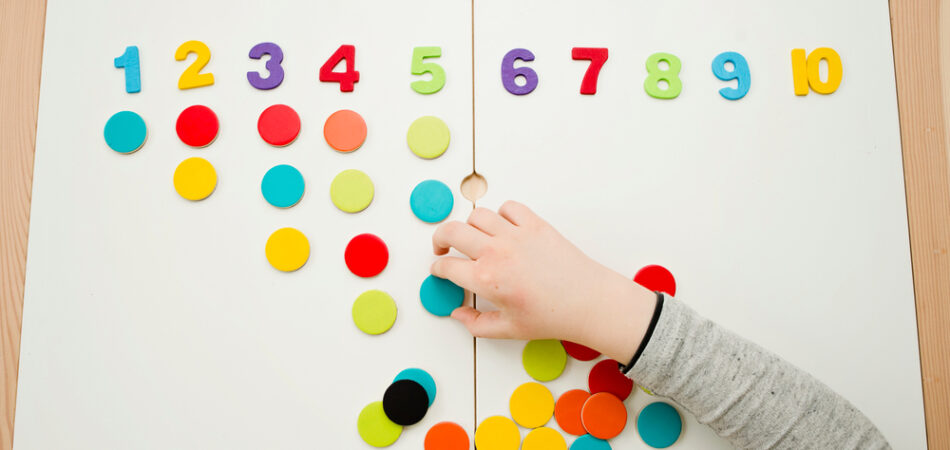
One of the first steps in nurturing early math skills is to introduce basic math concepts to your child. Begin by teaching them simple counting, number recognition, and basic shapes. Use everyday objects such as toys, fruits, and household items to demonstrate these concepts in a practical way. For example, you can ask your child to count, how many apples are on the table or identify different shapes in their environment. There are toy stores and educational centers where you can find a variety of math-related toys and materials to help your child learn these basic concepts.
Engaging in Preschool Math Activities
Preschool Math Activities
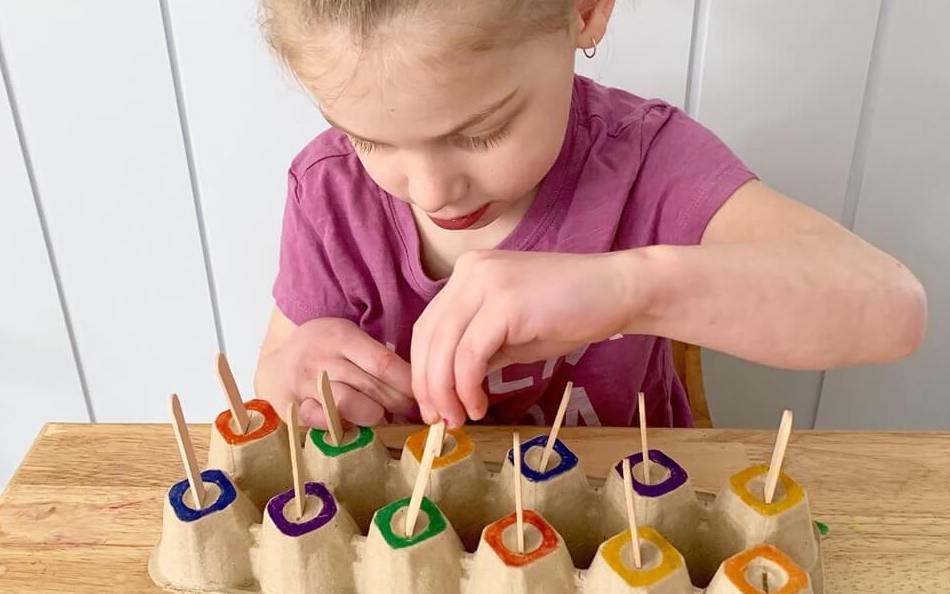
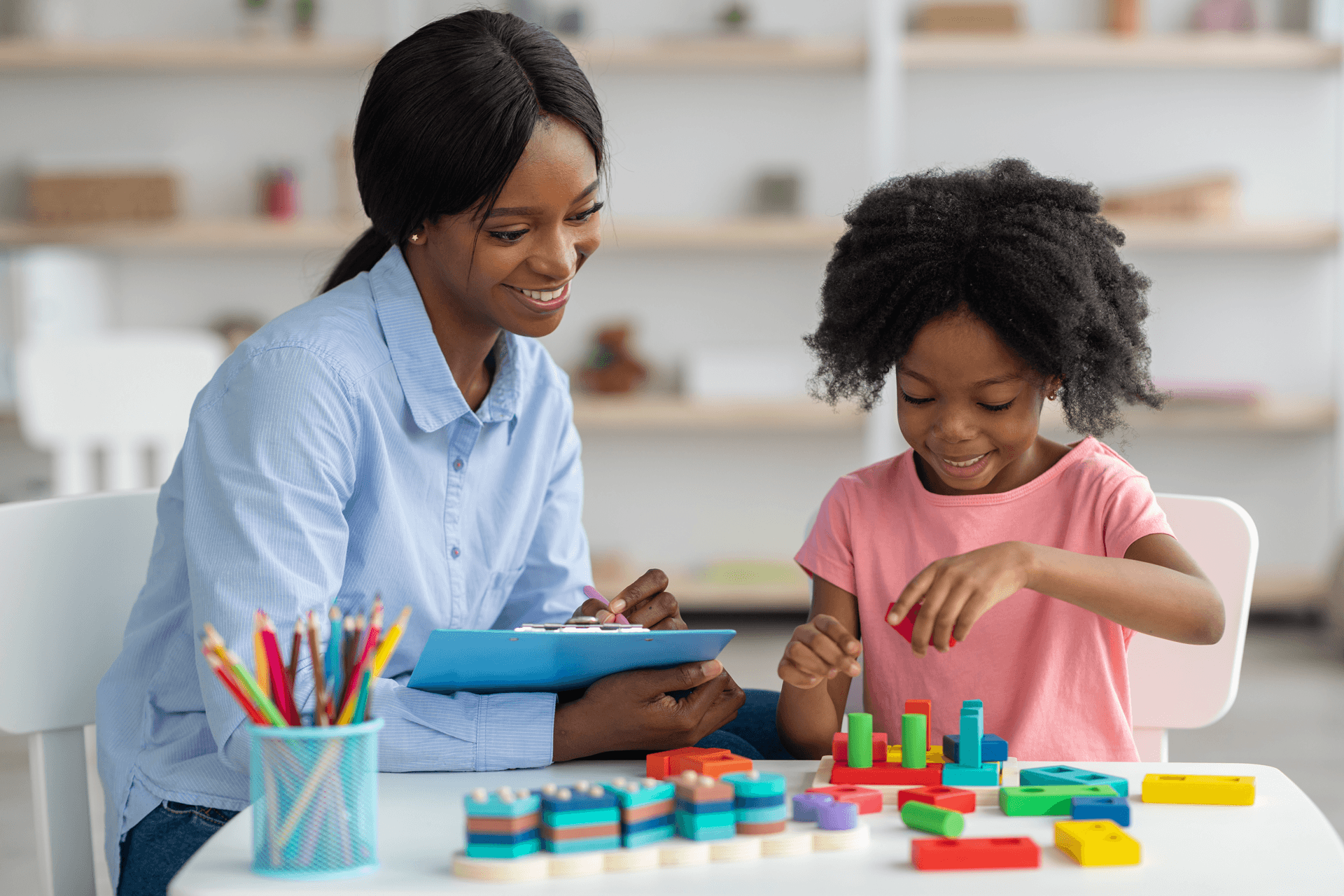
Enrolling your child in preschool math activities is a great way to help them develop their math skills in a structured and supportive environment. There are preschools and childcare centers that offer math-focused programs designed specifically for young children. These activities include games, puzzles, and hands-on exercises that make learning math fun and interactive. By participating in these activities, children can improve their counting, sorting, and problem-solving skills while developing a love for math at an early age.
Incorporating Math into Daily Routines
Another effective way to nurture early math skills is to incorporate math into your daily routines and activities. This can be as simple as counting the number of steps when climbing stairs, measuring ingredients while cooking, or sorting laundry by colors or sizes. By making math a part of your child’s everyday life, you are helping them see the practical applications of math and reinforcing their understanding of mathematical concepts. You can involve your child in various activities such as grocery shopping, meal preparation, and gardening to help them practice their math skills in a real-world context.
Utilizing Educational Apps and Games
With the advancement of technology, there are numerous educational apps and games available that can help children enhance their math skills. Look for apps that focus on number recognition, addition, subtraction, and basic math operations. These apps provide a fun and interactive way for children to learn and practice math concepts. There are educational centers and toy stores that offer a wide range of educational apps and games suitable for children of all ages. Encourage your child to explore these apps and games to reinforce their math skills in a playful manner.
Exploring Math Through Play
Play is an essential part of a child’s development, and it can also be a great tool for nurturing early math skills. Encourage your child to play with math-related toys such as blocks, puzzles, and shape sorters. These toys help in developing their spatial awareness, problem-solving abilities, and critical thinking skills. Organize math-themed play dates with other children where they can engage in math-focused games and activities together. There are play centers and indoor playgrounds where children can interact with math-related toys and games to enhance their math skills in a fun and social setting.
Building a Strong Foundation
Nurturing early math skills is essential for setting a strong foundation for your child’s mathematical development. By introducing basic concepts, engaging in preschool math activities, incorporating math into daily routines, utilizing educational apps and games, and exploring math through play, parents can help their children excel in math. There are plenty of resources and opportunities available for parents to support their child’s math learning journey. Remember, every child learns at their own pace, so be patient and encouraging as you nurture your child’s early math skills.
Winter break is a perfect opportunity to spend quality time with your child and engage in fun and creative activities. Arts and crafts provide a fantastic way to bond, explore creativity, and develop fine motor skills. With winter as the inspiration, here are 15 winter-themed arts and crafts ideas to keep your child entertained during the break.
1. Snowflake Cutouts
Encourage your child to create unique snowflake designs by folding and cutting paper. They can experiment with different patterns and sizes to make a beautiful collection of snowflakes to hang around the house.
2. Popsicle Stick Snowman
Use popsicle sticks to construct a cute snowman. Your child can paint the sticks, glue them together, and add googly eyes, buttons, and a carrot-shaped nose for a festive touch.
3. Cotton Ball Polar Bears
Let your child’s imagination run wild while making adorable polar bears using cotton balls. They can create a textured fur effect by gluing the cotton balls together and adding paper ears, eyes, and a nose.
4. Paper Plate Winter Scene
Transform a simple paper plate into a winter wonderland scene. Your child can paint the plate blue for the sky, glue cotton balls for snow, and add cutouts of trees, snowmen, and other winter elements.
5. Handprint Reindeer
Trace your child’s hand on brown construction paper and cut it out. Use it as a base to create a reindeer by adding googly eyes, a red pom-pom for the nose, and antler cutouts.
6. Salt Dough Ornaments
Make homemade ornaments using salt dough. Your child can help you mix flour, salt, and water to create the dough, then shape it into winter-themed objects like snowflakes, mittens, or snowmen. After baking, they can be painted and decorated.
7. Winter Collage
Collect old magazines, newspapers, and scrap paper. Encourage your child to cut out winter-themed images and create a collage representing winter scenes, snowflakes, or even their dream winter vacation.
8. Ice Painting
Take advantage of the freezing temperatures by trying ice painting. Fill ice cube trays with water and add a few drops of liquid watercolor or food coloring to each compartment. Once frozen, let your child use the colorful ice cubes to paint pictures on paper.
9. Marshmallow Snowmen
Using toothpicks, show your child how to build a snowman out of marshmallows. They can decorate it with icing, chocolate chips, or small candies to add character to each snowman.
10. Winter Bird Feeders
Help your child create bird feeders to attract feathered friends to your backyard during the winter months. Use pinecones, peanut butter, and birdseed or make bird feeders out of empty toilet paper rolls and a mixture of seeds and suet.
11. Chilly Penguin Craft
Using black construction paper, help your child cut out and assemble penguins. They can add googly eyes, a small orange triangle for a beak, and white paper cutouts for bellies. Hang them around the house for a wintry decoration.
12. Stained Glass Window Decorations
Using black construction paper, help your child cut out winter-themed shapes such as snowflakes, icicles, or pine trees. Attach colored tissue paper to the back of the paper cutouts, creating a stained glass effect when hung on windows.
13. Paper Plate Ice Skating Rink
Transform a paper plate into an ice skating rink. Your child can draw skaters on paper and cut them out. Attach them to paper clips and place them on the plate, creating a fun ice skating scene.
14. Mitten Puppets
Using colored felt or paper, help your child cut out mitten shapes. They can decorate them with fabric scraps, buttons, or markers. Attach a Popsicle stick to the back, and your child will have their own winter-themed puppets to play with.
15. Winter Landscape Paintings
Set up a painting station for your child to create winter landscapes with watercolors or acrylic paints. They can experiment with shades of blue, white, and silver to convey the beauty and serenity of a snowy winter day.
Summary
Engaging in arts and crafts activities with your child during winter break not only provides entertainment but also fosters creativity and imagination. These winter-themed ideas will surely keep them entertained and motivated to explore their artistic side during the break. So, grab your supplies, get creative, and enjoy making lasting winter memories with your child.
A growing number of parents and educators are embracing the power of outdoor learning preschool programs. These approaches prioritize fresh air, natural settings, and unstructured play to nurture children’s cognitive, social, and physical growth. For young learners, the outdoors is more than just a playground—it’s a rich environment brimming with opportunities to explore, imagine, and discover. The benefits of outdoor play for kids extend far beyond simple recreation, forming a cornerstone for lifelong development. When children interact with the natural world, they are engaging in experiences that sharpen problem-solving skills, stimulate creativity, and strengthen their bodies, all while fostering a deep connection to nature.
Outdoor play is not just an occasional treat; it is an essential part of childhood that should be integrated into early learning routines. The philosophy of nature-based learning—rooted in the understanding that children develop best when they are connected to the environment—has shown remarkable results in both academic and emotional growth. In locations where green spaces, parks, and nature preserves abound, the possibilities for enriching children’s lives through the outdoors are abundant. For parents seeking the best start for their children, the call of the outdoors is one they should answer with intention.
The Cognitive Benefits of Outdoor Play
One of the most compelling reasons to prioritize outdoor learning preschool programs is the profound impact they have on children’s cognitive development. When children step outside, they are entering an ever-changing classroom where each new day presents fresh challenges and discoveries. Observing a trail of ants, navigating uneven terrain, or building a fort from fallen branches requires concentration, planning, and decision-making. Unlike static indoor toys, nature’s elements inspire open-ended thinking, which is essential for early problem-solving skills.
Outdoor environments are dynamic, encouraging children to adapt and innovate. For example, a child may find that the sticks they’ve collected for a pretend campfire are too short, prompting them to search for longer ones. This active experimentation builds cognitive flexibility—a skill that will serve them well in academic settings. Studies show that nature-based learning can improve attention spans and reduce symptoms of attention deficit disorders by offering multi-sensory engagement and movement that traditional classrooms often lack.
Many preschools and early childhood centers have integrated structured nature walks and outdoor lessons into their curricula. These programs combine literacy and numeracy activities with real-world applications—counting pinecones, identifying colors in a flower bed, or measuring puddles after rainfall. This integration ensures that outdoor play is not separate from learning, but rather a powerful complement to it.
Emotional and Social Growth Through Nature
While the cognitive gains of outdoor play are significant, the emotional and social benefits are equally transformative. The outdoors provides a low-pressure environment where children can interact with peers in cooperative and imaginative play. Without the confines of walls or a fixed set of toys, children naturally engage in more complex social negotiations—deciding who takes the next turn on the swing, working together to build a sandcastle, or creating shared storylines in pretend play.
In nature-based learning settings, children also encounter opportunities for risk-taking in a safe context. Climbing a tree, balancing on a log, or jumping over a stream teaches them to assess danger, make decisions, and build confidence in their abilities. These experiences translate into resilience—an essential trait for navigating life’s challenges.
Outdoor play often means connecting with the unique landscapes, from wooded trails to riverside parks. These local environments provide endless opportunities for shared discovery, strengthening bonds between classmates and fostering a sense of community. Emotional regulation also improves as children spend more time outside; exposure to natural light, fresh air, and green spaces is linked to lower stress levels and improved mood in both children and adults.
The Physical Health Advantages
The physical benefits of outdoor play for kids are perhaps the most visible. Running, climbing, jumping, and balancing on varied terrain build gross motor skills, while picking up pebbles or weaving flower crowns hones fine motor control. In contrast to the sedentary tendencies of indoor activities, the outdoors demands movement, which supports cardiovascular health, muscle development, and coordination.
Spending time outside also boosts vitamin D levels, essential for bone growth and immune function. Seasonal changes bring a variety of weather conditions, children learn to adapt physically to different environments—bundling up for snowy play, staying hydrated in summer heat, or navigating muddy spring trails. These adaptations not only strengthen their bodies but also cultivate a sense of comfort and capability in all kinds of conditions.
Incorporating outdoor learning preschool programs into daily routines ensures that physical activity is a consistent part of children’s lives. This foundation helps establish healthy habits early, reducing the risk of obesity and promoting overall well-being well into adulthood.
How Nature-Based Learning Prepares Children for the Future
In a world where technology continues to dominate daily life, nature-based learning offers an important counterbalance. Outdoor play teaches children patience, observation, and an appreciation for the slow rhythms of the natural world—qualities that are increasingly rare in our fast-paced society. By engaging with the unpredictability of nature, children develop adaptability and resourcefulness, traits that will serve them in a range of future contexts.
Research shows that children who spend more time outdoors are more likely to develop environmental stewardship as they grow older. This connection to nature fosters a sense of responsibility for the planet, encouraging sustainable behaviors from an early age. For families, where access to nature is abundant, fostering this environmental awareness is both an opportunity and a responsibility.
Outdoor learning preschool programs that emphasize nature-based learning also help bridge socio-economic gaps. Nature is, at its core, accessible to all, and outdoor play does not require expensive equipment or technology. Instead, it relies on curiosity, imagination, and the inherent richness of the natural world.
Embracing the Outdoors in Early Childhood Education
For parents and educators, the message is clear: outdoor play is not an optional add-on to early childhood education—it is a vital component. The benefits of outdoor play for kids encompass cognitive, emotional, social, and physical development, all while nurturing a deep connection to nature. By prioritizing outdoor learning preschool programs and embracing nature-based learning, we can give children the tools they need to thrive not just academically, but in every aspect of life.
Encouraging children to explore the outdoors—whether through organized programs, family outings, or spontaneous backyard adventures—ensures that they grow up with a strong foundation for lifelong learning and well-being. As communities, we must advocate for policies and practices that protect children’s right to play outside, even in the face of increasing screen time and academic pressures.
Conclusion
The call to embrace outdoor play is more than a trend; it is a recognition of the timeless truth that children learn best when they are free to move, explore, and discover in the natural world. Nature offers the most authentic classroom, and the lessons it imparts are ones that will stay with children for a lifetime.
Childhood development is a fascinating and complex journey, a period of rapid and significant change that shapes the foundation of who we become. For parents, caregivers, and educators, understanding these stages is key to providing the nurturing environment children need to thrive and unlock their full potential.
What is Childhood Development?
Childhood development refers to the sequence of physical, language, thought (cognitive), and socio-emotional changes that occur in a child from birth up to the beginning of adolescence.1 While every child is unique and develops at their own pace, these changes generally follow predictable patterns, often called developmental milestones.2
The Four Core Domains of Development
Development is holistic, meaning progress in one area often influences others.3 We can categorize this growth into four main domains:
1. Physical Development
This domain covers the growth of the body and the brain, and the development of motor skills (coordination, balance, and movement).4
Gross Motor Skills: Involve large muscles for activities like crawling, walking, running, and jumping.5
Fine Motor Skills: Involve small muscles, often in the hands, for tasks like grasping, drawing, and buttoning a shirt.6
2. Cognitive Development
Cognitive development is about how children learn to think, explore, and problem-solve.7 It includes the development of knowledge, memory, language, and executive functions (like planning and self-control).
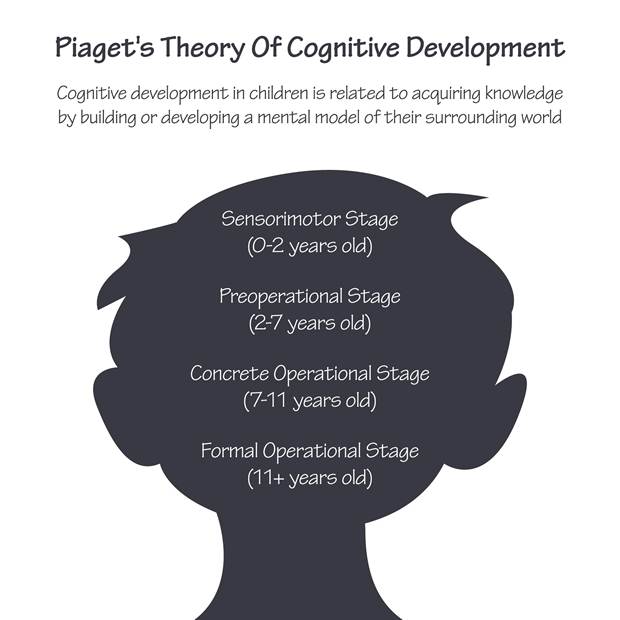
Key Concept: Swiss psychologist Jean Piaget described stages where children construct an understanding of the world through interaction.8 A key cognitive milestone is object permanence—knowing that an object still exists, even if it is hidden.9
Shutterstock
3. Language Development
More than just learning words, language development involves the ability to communicate, understand, and express feelings.10 This includes receptive language (understanding what is said) and expressive language (speaking and communicating).11
Stages: From cooing and babbling in infancy to speaking first words (around 12-18 months) and forming complex sentences, language skills rapidly expand during the preschool years.12
4. Social and Emotional Development (Socio-Emotional)
This domain focuses on a child’s ability to form relationships, manage their feelings, and understand the feelings of others.13 A crucial part of this is developing a secure attachment to primary caregivers.
Emotional Regulation: Learning to manage powerful feelings like anger, frustration, and excitement in healthy and constructive ways.14
Empathy: Developing the ability to see things from another person’s perspective.15
Key Stages and Milestones
While development is continuous, we can broadly group the journey into distinct stages.
Stage
Age Range
Core Focus & Milestones
Infancy
Birth – 1 Year
Trust and Attachment. Develops reflexes, rolls over, sits up, begins to babble, explores the world primarily through senses (touch, taste).
Toddlerhood
1 – 3 Years
Autonomy and Independence. Walks independently, develops fine motor skills (stacking blocks), speaks first phrases, begins toilet training, expresses strong emotions (“terrible twos”).
Preschool
3 – 5 Years
Initiative and Imagination. Runs, skips, draws simple shapes, asks “why,” engages in complex imaginary play, learns to share and take turns (social skills).
Middle Childhood
6 – 12 Years
Competence and Peer Relationships. Master academic skills (reading, math), logic-based thinking, develops stronger friendships, understands rules and fairness.
Nurturing Healthy Development: Tips for Parents
The most powerful tool for fostering a child’s development is responsive and engaged interaction.
Read Together Daily: This is crucial for both cognitive and language development, introducing new vocabulary and concepts.
Encourage Play: Play is a child’s “work.”16Unstructured play (allowing the child to direct the activity) boosts creativity, problem-solving, and socio-emotional skills.17
Validate Feelings: Help your child name their emotions (“I see you are frustrated because the tower fell”) to teach them emotional literacy and regulation.18
Create a Safe Exploration Zone: Provide a secure environment that allows them to move, touch, and safely experience their surroundings, which encourages motor and sensory development.19
Model Positive Behavior: Children learn by observing. Your reactions to stress, your interactions with others, and your enthusiasm for learning all serve as a template for them.
When to Seek Guidance
It is essential to remember that variability is normal. Some children walk early, others talk early. However, significant, consistent delays in meeting multiple milestones might warrant a conversation with your pediatrician or an early childhood specialist.
Common Red Flags (Seek advice if you notice): Loss of skills they once had, inability to bear weight by 1 year, lack of eye contact, or a severe delay in talking or understanding others.
The journey of childhood development is truly a masterpiece in the making. By understanding the core domains and providing consistent love, support, and opportunities for exploration, we empower our happy little minds to grow into confident, capable, and compassionate individuals.
It happens to every parent: the meltdown in the grocery store, the sudden tears over a broken toy, or the furious stomp of a foot when they can’t get their way. It’s exhausting, but remember this: A big feeling is an opportunity, not a burden.
The work of a “Happy Little Mind” isn’t about eliminating these emotions; it’s about giving our children the tools to understand and manage them. Here is a three-step guide to helping your child navigate their biggest feelings with grace and connection.
1. Shift Your Perspective: Feelings Are Not “Bad”
The first step happens within you. We often try to stop a child from feeling sad or angry by saying things like, “Stop crying!” or “Don’t be mad.” This teaches them that their feelings are unacceptable or need to be hidden.
Instead, remember that feelings are simply signals. Our job is to accept the feeling (“It’s okay to feel angry”) while firmly guiding the behavior (“but it is not okay to hit”).
2. Step 1: The R.A.L. Technique (Recognize, Acknowledge, Label)
When a big emotion hits, your child is often operating with a stressed brain that can’t access logic. The fastest way to bring them back down is through validation.
Recognize: Observe their body language (tight fists, slumped shoulders, loud voice).
Acknowledge: State what you see without judgment. Example: “Your face looks really tight right now.”
Label: Give the feeling a name. This is the superpower step! Example: “I see you are feeling really frustrated because your block tower keeps falling.”
Labeling a feeling helps a child connect the physical experience to a word, making them feel understood and beginning the process of self-regulation.2
3. Step 2: The Co-Regulating Corner
During a meltdown, your child needs to borrow your calm. You are their co-regulator. Resist the urge to yell or punish, and instead, focus on calming the storm together.
Move to Safety: If possible, take them to a quiet space (a “Calm Corner”) away from over-stimulation.
Physical Connection: Offer a tight hug, or simply sit close and rub their back. Physical connection releases calming hormones.
Deep Breathing Together: Ask them to put their hand on your chest and feel your deep, slow breaths. Don’t talk too much; just breathe.
4. Step 3: Teaching the Tool Kit (While Calm)
You can’t teach a child a coping skill when they are in the throes of a tantrum. You must teach the “Tool Kit” when everyone is calm.
Introduce and practice simple calming techniques:
The 5-Finger Trick: Trace the fingers of one hand with the pointer finger of the other. Inhale as you trace up one side of the finger, and exhale as you trace down the other side.
Drawing Their Feeling: Give them a crayon and paper and tell them to “draw the anger” or “color the frustration.” This externalizes the emotion.
Stomping or Shaking: Sometimes anger needs physical release. Teach them to safely stomp their feet or shake their bodies to release the energy.
The key takeaway? The goal is connection over control. By accepting your child’s emotions and teaching them how to cope, you are building the foundation for emotional resilience—the ultimate gift for a happy little mind.
Are your mornings a race against the clock? Do you feel like a broken record, constantly nagging about teeth brushing and getting dressed?
You are not alone. Morning chaos is a reality for many families. However, implementing a simple, consistent routine can fundamentally change the tone of your home, replacing stress with connection and joy.
The most peaceful mornings don’t happen by accident; they start the night before! Here are five simple steps you can start using today to reclaim your mornings.
1. The ‘Power of 3’ Evening Prep
The number one secret to a stress-free morning is reducing the number of decisions needed while everyone is still sleepy.
Clothes: Lay out the complete outfit (including socks and underwear!) before bedtime.1
Lunches: Prep as much of the lunchbox as possible. If not fully packed, place all ingredients/containers together in one spot in the fridge.
Backpacks: Have them packed with homework/notes and staged right next to the door or in the “launch zone.”
2. The Gentle Wake-Up
A jarring, blaring alarm can instantly trigger an alert response in the brain. Start the day with calm, not cortisol.
Instead of a loud alarm, try a “Sunlight Start”—open the curtains or use a light-up alarm clock that gradually brightens the room. When you go in to wake your child, give them a 10-minute warning before you expect them to be out of bed. This honors their transition time and reduces resistance.
3. Eat, Connect, Talk (Screens Off!)
Breakfast is a golden opportunity for connection, not just consumption. While it can be tempting to let kids watch a show while they eat, screens during breakfast often make transitions harder later.
Simple Breakfast: Keep breakfast simple and consistent on weekdays (oatmeal, toast, yogurt).
Screen-Free Connection: Use this time to ask one positive, forward-looking question. Examples: “What is one thing you are looking forward to today?” or “What kind of happy feeling do you want to bring to school today?”
4. The Responsibility Checklist
Reduce nagging by giving the responsibility back to the child using a visual guide. A simple checklist turns your verbal demands into an engaging, independent task.
For younger kids, use pictures. For older kids, use words. Post it in the bathroom or their bedroom.
Task,Check
Get Dressed
Brush Teeth
Comb Hair
Shoes On
5. The Consistent Farewell Ritual
The final moments together should signal security and love, not rushing and frustration.
Create a consistent, loving goodbye that never changes. This ritual is their anchor for the day. It could be a silly secret handshake, a “Triple Squeeze” (I love you), or a specific phrase like, “Have a wonderful day, I’m thinking of you!”
The key takeaway? Consistency is the magic ingredient. Don’t worry about perfection, just stick to the routine. You’ll soon find that a little structure leads to a lot more joy in your mornings!